
Photo Exhibit: “If you feel strongly, you stand up for it.”
Introduction
Four advocates stood up for what was right in the 1970s and 80s, and their actions reaffirmed fundamental rights we have to this day. These are the brave and dedicated people who did not back down from legal action to protect our civil liberties, even when it was hard.
Each person photographed was interviewed by ACLU of RI staff. Special thanks to Vivan, Dan, Debbie; Tom; and Mary Ann for their time.
All photos by James Hazelwood
Art, Obscenity, and Censorship
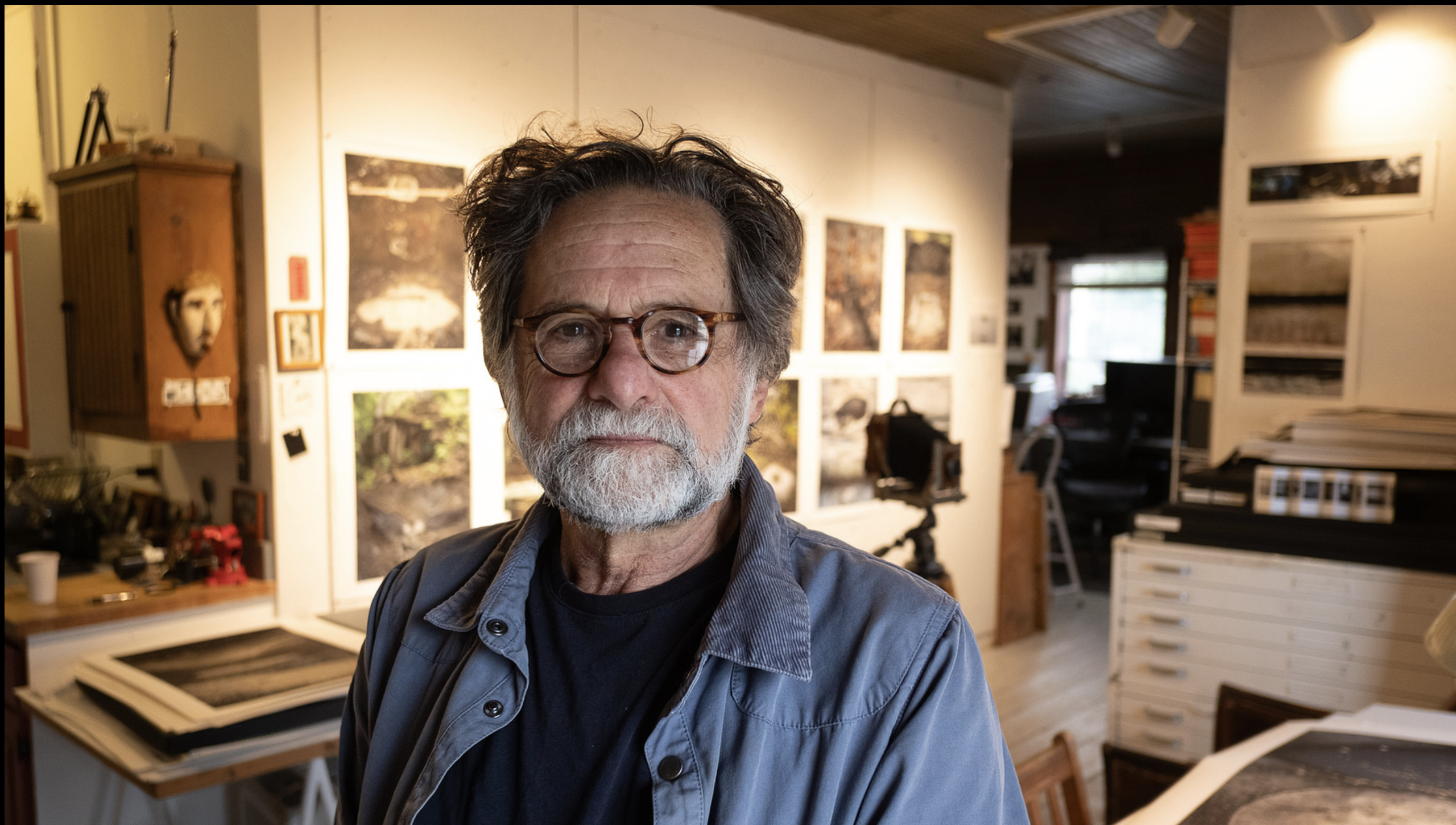
Wisner v. Ricci (1978)
It was a rainy spring day in 1978 when the police raided an art gallery in downtown Providence, taking art off the walls that was never seen again.
The exhibition was organized in part by Tom Young, a professor at the Rhode Island School of Design (RISD) who was teaching students about building an art exhibit. In 1978, his class’s work was at the center of this police raid — and the beginning of a years-long case about art and the First Amendment.
The exhibit was titled Private Parts. Hosted at Electron Movers Gallery, which was a video collective on N. Main Street in Providence, the class sent out a call for submissions, under the titular theme. All submissions were fully anonymous. According to Tom, art was submitted from across the country, and the content ranged from an image of a military private’s shoulder stripes to erotic art.
Just a few days prior, a new Rhode Island law had been passed to crack down on pornography. According to an interview with another RISD professor, the police believed the exhibit was created to see what the boundaries of that law were; in Tom’s memory, the police were the ones using the Private Parts exhibit as a test case.
The Exhibit Opens
On the second day of the show, May 15, as a line of people waited to see the art, the Providence Police arrived. Lieutenant Yacavone walked through the gallery, confiscating art that he believed was obscene, and asking for information about the sponsors of the event so he could arrest them under the state’s newly enacted obscenity law.
Neither Tom nor any of the faculty or students present stepped forward, and the artists that owned the gallery reportedly fled to New York City to avoid arrest. After the raid, Tom and about 20 students went to the ACLU of RI for help to sue the Providence Police Department.
ACLU of RI Gets Involved
The ACLU of RI brought the case to federal court, represented by Lynette Labinger and John Roney, where the case was heard in front of Judge Raymond J. Pettine. By Tom’s account, Judge Pettine was genuinely curious about the artists’ work and wanted to learn about their perspective on the art.
The plaintiffs’ argument was that art is protected speech and that the context the art is in matters. During the hearings, the artists and professors presented to the judge about the history of art, and at one point set up a smaller version of the exhibit with the art that had not been taken by the police.
Tom recalled a senior BFA student speaking as a witness from the stand, and explaining to the court that even the microphone he was speaking into could be viewed differently in different contexts: whether it was placed in a courtroom, a museum, or a pornographic magazine.
At one point during the hearings, an attorney for the state was shown a picture of Michaelangelo’s David and asked by the court if he would have seized it; he, without recognizing it as a famous statue, said yes.
Artists Win the Case
The case was decided in the artists’ favor. Tom said he believed the reason they won the case — affirming that the art was protected speech — was because Judge Pettine could recognize the importance of art in context. The artists were also awarded monetary damages.
According to an artist who recorded the police raid on film, the art that was taken by the police was not returned to the artists. Although Judge Pettine encouraged the plaintiffs to reopen the show (which Tom said he and the students had jokingly considered calling “Yacavone’s Choices”), the artists decided not to. Tom recalled that the case took a year of time and energy, which made the artists want to move on. Tom still runs an art studio in Shelburne Falls, MA.
Standing Up for Bodily Autonomy
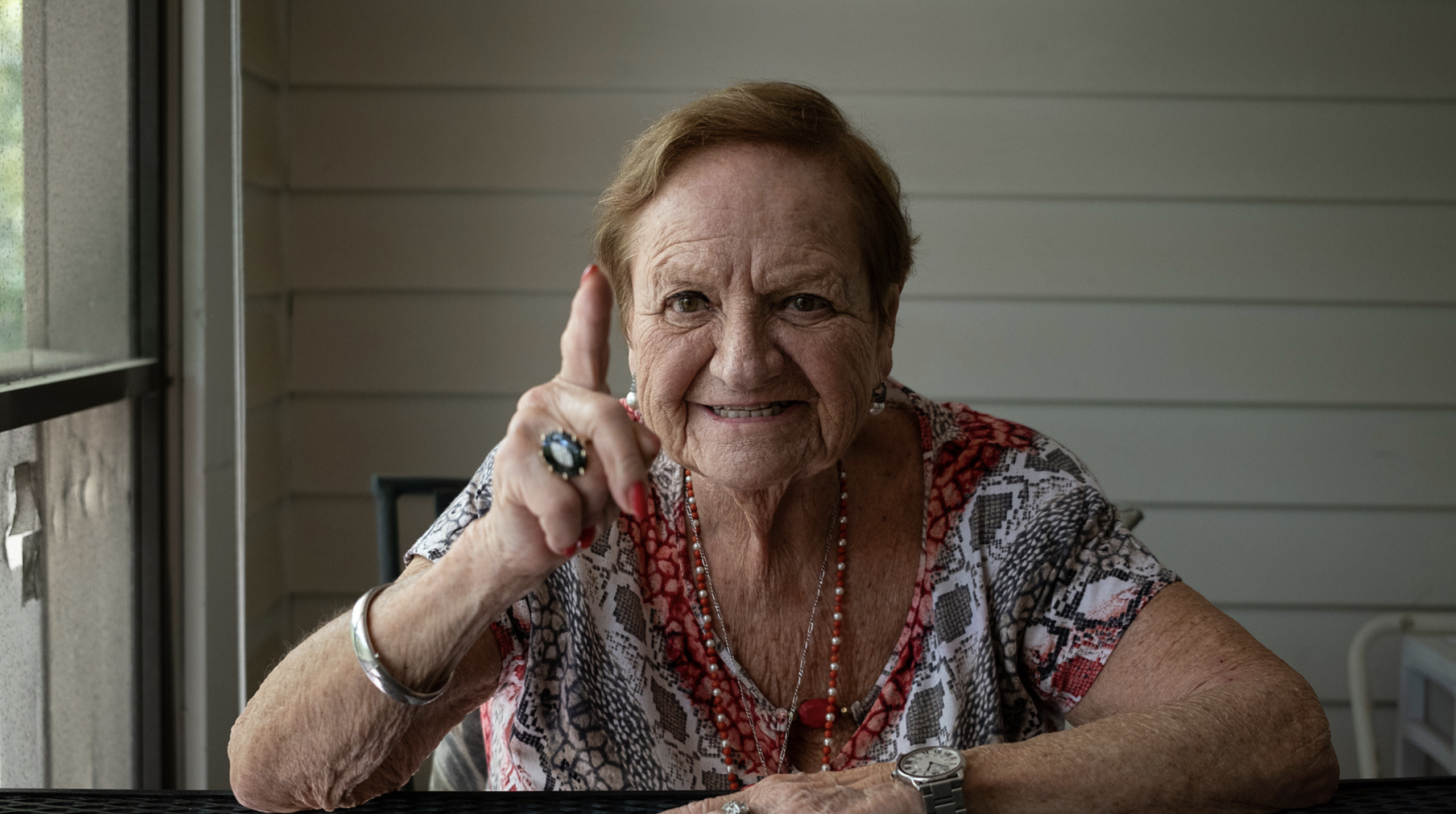
“Clearly, Mary Ann Sorrentino’s a troublemaker — and I am! But I like to think I’m a troublemaker about things that need to have trouble made about them. I don’t just make silly trouble.”
Mary Ann Sorrentino was a social worker for the state of Rhode Island who worked with women with children who were living in poverty. In her role, she began providing information to her clients about birth control. She became the executive director of Planned Parenthood of Rhode Island in 1977 and proudly continued to run the first abortion clinic in the state.
She was also a practicing Catholic who was later publicly excommunicated from the Church because of her unwavering pro-choice beliefs.
Mary Ann said she called the ACLU of RI for legal advice frequently. Over the years, she began to better understand some of the legal issues in Rhode Island, and “grew braver” as she kept working for reproductive rights. She has been a long-time ACLU of RI supporter and has served as a board member.
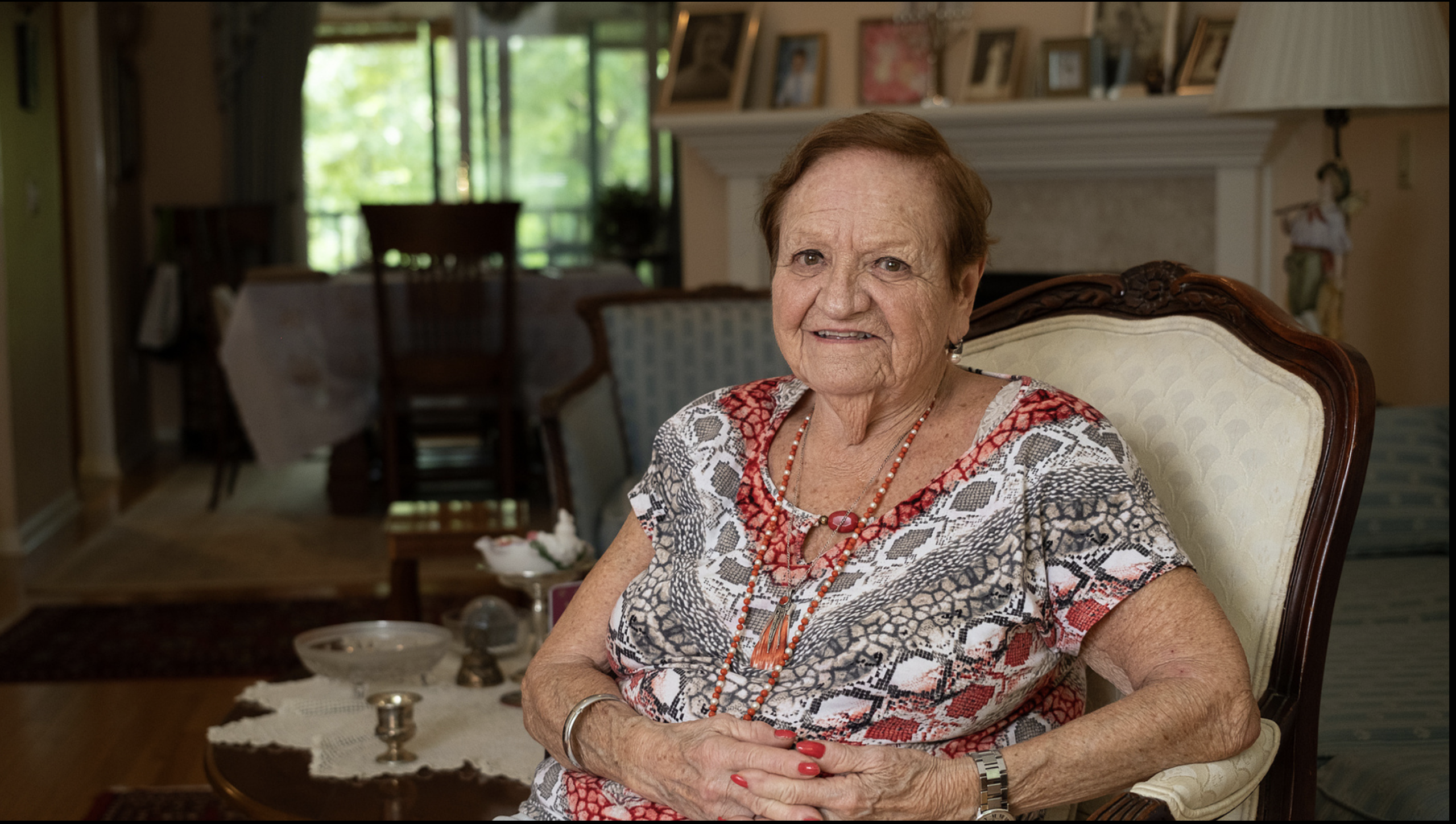
The ACLU of RI worked with her on several cases where Planned Parenthood was the plaintiff, to challenge legislative efforts to restrict abortion in state law. Abortion was legal in Rhode Island during this time, but these cases struck down lawmakers’ efforts to put obstacles in the way of exercising this critical right.
To give just three examples where Mary Ann worked with the Rhode Island affiliate:
- In 1984, the ACLU of RI successfully challenged a state law requiring husbands to be notified before a woman could have an abortion. Planned Parenthood v. Board of Medical Review.
- In 1986, the ACLU of RI successful challenged onerous “informed consent” and “parental consent” abortion statutes enacted by the General Assembly. Planned Parenthood v. Roberts.
- That same year, the ACLU of RI successfully challenged in federal court a law prohibiting health insurers from providing abortion coverage except as an optional rider at an additional premium. Planned Parenthood v. Calderone.
Mary Ann said she has come to understand that abortion will always be an issue. She also highlighted that many people don’t know what their rights are, and around issues like abortion that are very controversial, they’re afraid to ask anybody about their rights and liberties.
Of the ACLU of RI, Mary Ann said the affiliate’s work is “lifesaving, not only for the pro-choice question, but for so many others that can be more painful to people.”
Protecting Religious Freedom in Public Schools
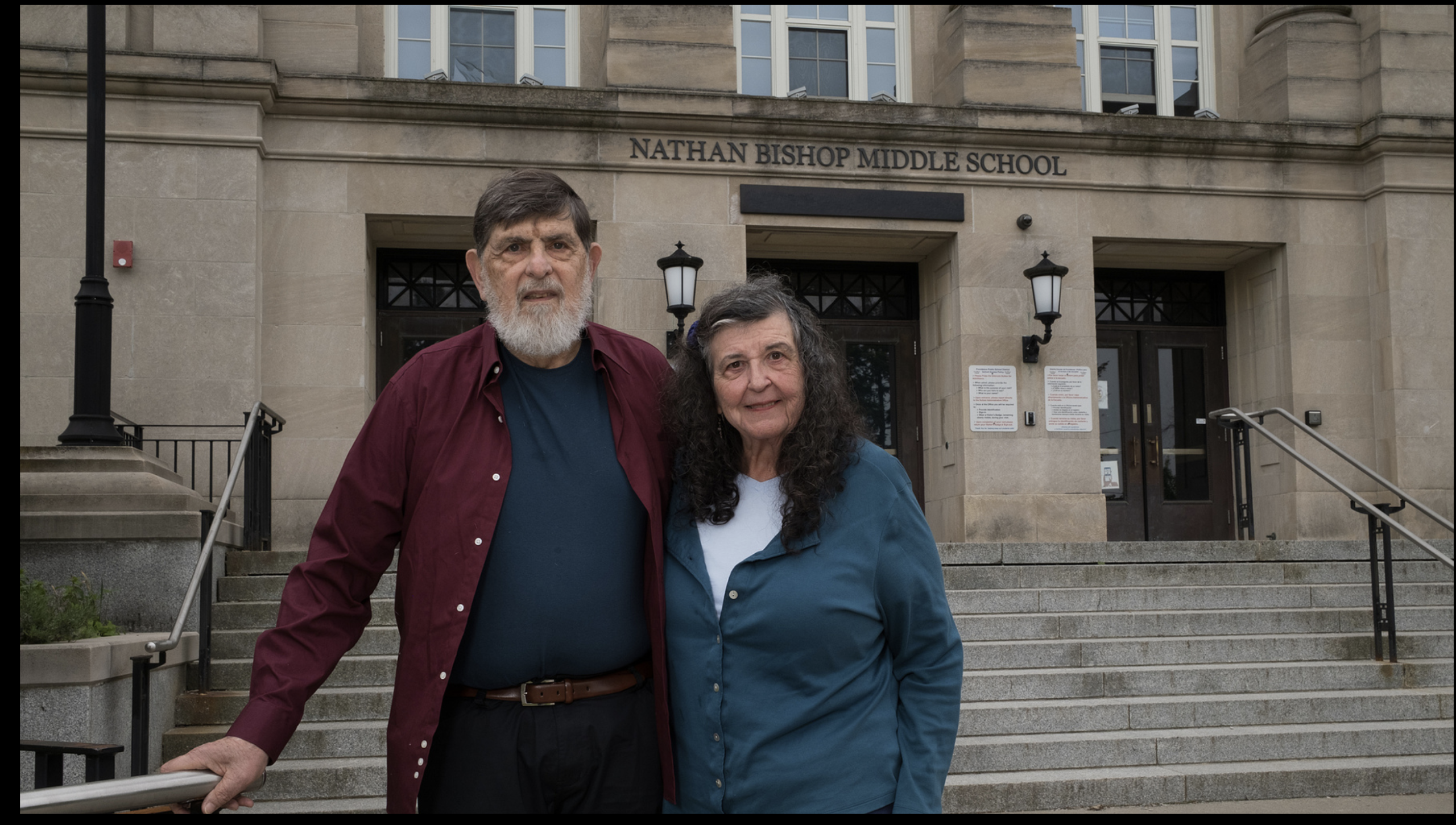
Lee v. Weisman (1992)
“Shocking, offensive, inappropriate.”
This is how Vivian and Dan Weisman described sitting during an invocation by a Baptist minister at their older daughter Merith’s 1987 eighth grade graduation at Nathan Bishop Middle School, a public school in Providence.
The Weismans recalled the pressure to stand during the invocation. As advocates for the separation of church and state, and long-time ACLU of RI members and board members, the couple knew that prayer at a public school graduation was unconstitutional.
The couple’s younger daughter, Debbie, was going to graduate from the same school three years later. Over those three years, despite meeting with the school administration and Vivian raising the topic of the graduation invocation in the Parent-Teacher Association, their constitutional concerns were dismissed. The ACLU of RI had sent letters to the school without success.
The year Debbie was going to graduate eighth grade, the Weismans, who are Jewish, were told by the teacher in charge of graduation that their concerns had been heard and that the school “got you a rabbi” to do the invocation instead. The school principal even gave the rabbi a pamphlet about how to write a prayer for a civic event.
The Case Begins
Vivian and Dan asked their teenage daughters if they were willing and comfortable with the family going forward with a lawsuit against the school, and the kids vehemently agreed that they had to stand up for what was right. The couple made it clear that if either of the children had said no, they would not have pursued the case.
The ACLU of RI filed the case in federal district court a few weeks before Debbie’s graduation, asking the court to intervene before the upcoming graduation in June.
Only Dan and Debbie were present at the signing of the paperwork, as Vivian was at an ACLU convening out of state, so only their names are on the lawsuit.
Unfortunately, the court denied the request to intervene, in part because of the short turnaround time. There was a benediction at Debbie’s graduation, which the family chose not to attend.
After Graduation, the Case Continues
The lawsuit continued after the graduation was over, arguing that the school was violating the Establishment Clause of the First Amendment, which bars the government from promoting religion. The ACLU of RI won favorable decisions first in federal district court and then in the U.S. appeals court.
Then, the school appealed the case to the U.S. Supreme Court. As the lawsuit got more media attention, the family began getting hate mail from all over the country and even had to disconnect their phone at night to avoid phone calls from strangers.
At the U.S. Supreme Court
When the case was heard at the U.S. Supreme Court, Debbie and her sister attended the arguments with Steven Brown, the ACLU of RI’s executive director. Debbie recalled that the school principal, Robert E. Lee, whose name is on the case, did not get a seat in the court room.
The family had to wait months for the U.S. Supreme Court to make a decision in the case: 5-4 in favor of the Weismans. Years later, it was revealed that Justice Kennedy, who wrote the majority opinion, had changed his mind during deliberations, being swayed by the fact that the principal had given the rabbi a direction on how to write the prayer.
Debbie recalled she learned that they won the case when her grandma picked up their home phone to a reporter asking for a comment on the decision. Her grandmother hung up on the reporter and simply hugged Debbie repeating, “we won, we won.”